Tongue and Groove Siding in Moore, OK
Professional Tongue and Groove Siding in Moore, OK — Licensed, Insured & Locally Owned
Get expert tongue and groove siding installation, repair & replacement in Moore, OK. Moore Siding Pros serves Moore & OKC metro. Call (405) 956-2724 today!

Tongue and groove siding is one of the most time-tested exterior cladding systems available — each board interlocking with its neighbor to create a tight, weather-resistant shell that stands up to punishing Oklahoma conditions. At Moore Siding Pros, we specialize in professional tongue and groove siding installation, replacement, repair, and inspection for homeowners and commercial property owners throughout Moore, OK and the surrounding metro area.
Moore sits squarely in Tornado Alley, where wind-driven rain, violent hail, and dramatic temperature swings can destroy inferior siding within a few seasons. Our team understands the specific climate and soil conditions of Cleveland County and Oklahoma County, and we tailor every project to deliver lasting performance. Whether you are building new, upgrading an aging exterior, or repairing storm damage, Moore Siding Pros brings local expertise and craftsmanship to every job. Call us today at (405) 956-2724 to schedule your free consultation.
Understanding Tongue and Groove Siding
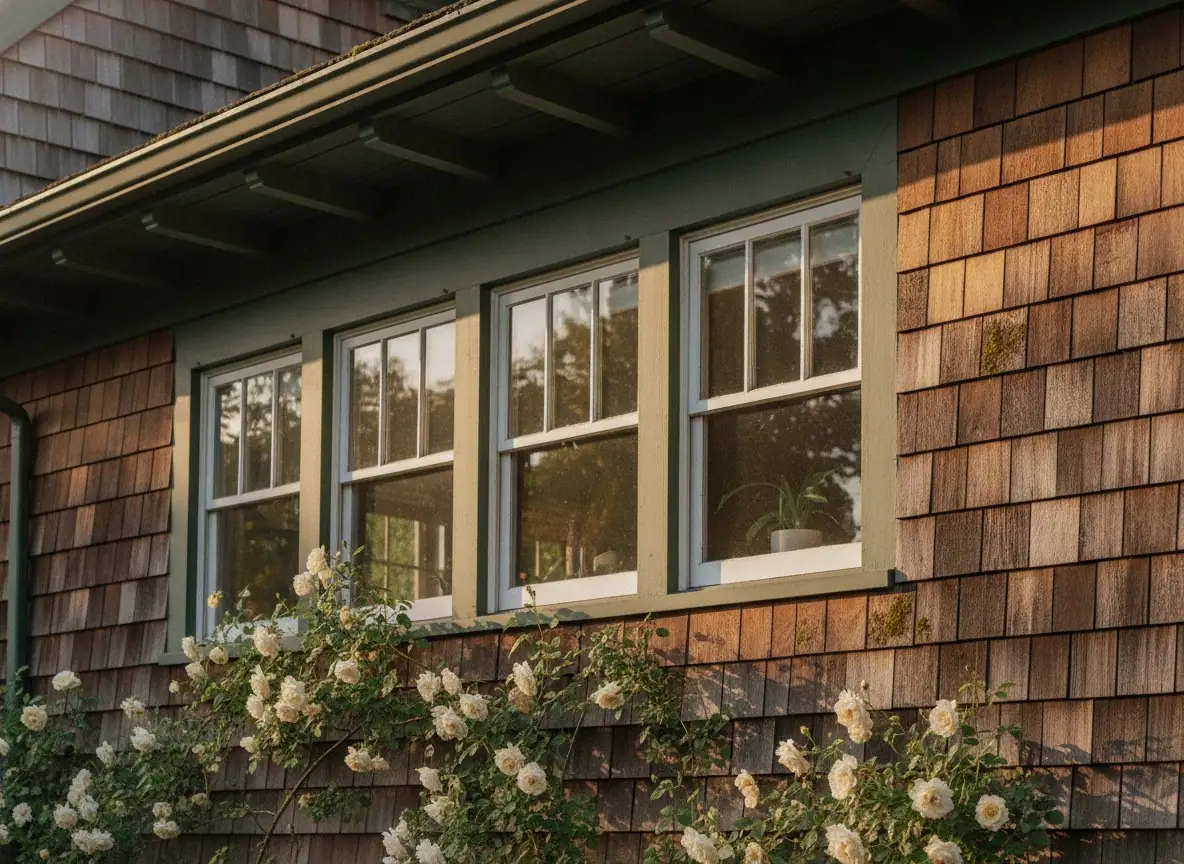
Tongue and groove siding is a board-profile system in which one edge of each plank is milled with a protruding “tongue” and the opposite edge carries a matching “groove.” When installed, the tongue of one board slides into the groove of the next, forming a virtually seamless, interlocked surface. This mechanical connection eliminates the wide gaps common to other horizontal or vertical siding profiles, which is why tongue and groove has been a preferred exterior cladding in the South-Central United States for well over a century.
Historically, tongue and groove siding was milled from old-growth pine, cedar, or cypress — woods prized for their natural oils and tight grain. Nineteenth-century farmhouses and craftsman cottages across central Oklahoma were frequently wrapped in vertical tongue and groove pine boards, many of which survived decades of Oklahoma weather before being covered by later renovation layers. Today, the profile is available in a wide range of materials: natural cedar, pine, redwood, engineered wood composites, fiber cement (including James Hardie products), and premium vinyl — each offering different levels of maintenance, durability, and cost.
Read moreShow less
In Moore and the broader Oklahoma City metro, tongue and groove siding appears on a variety of building types. Ranch-style homes built throughout the 1960s and 1970s in neighborhoods like Southgate and Westmoore frequently feature vertical tongue and groove accents on gable ends and covered porches. New-construction craftsman and farmhouse-style builds along SW 149th Street and in the Bellabrooke subdivision increasingly request full tongue and groove facades as a design-forward alternative to standard lap siding. Commercial buildings along Moore’s South Broadway corridor also use the profile on retail storefronts and restaurant exteriors for its warm, architectural appearance.
Because the boards interlock rather than simply overlap, tongue and groove siding resists wind uplift more effectively than many competing profiles — a critical advantage in a city that recorded an EF-5 tornado on May 20, 2013 with winds exceeding 210 mph. The mechanical bond between boards also helps prevent moisture infiltration when properly installed and maintained, protecting the structural sheathing, insulation, and framing beneath. Learn more about our full siding installation services
Why Tongue and Groove Siding Is Needed in Moore, OK
Tornado and Severe Wind Events
Moore sits at the intersection of Cleveland and Oklahoma counties inside a corridor that has been struck by violent tornadoes more frequently than almost any other city in America. The May 3, 1999 tornado produced the highest wind speed ever recorded near the surface — 301 mph on the Doppler radar — and carved a path directly through neighborhoods like Westmoore and Southgate. The May 20, 2013 EF-5 event followed a track overlapping much of the same geography, with a damage swath roughly 1.3 miles wide. During these storms, standard vinyl or aluminum lap siding routinely peels away because individual boards are only nailed at the face; tongue and groove boards, by contrast, are edge-nailed or blind-nailed through the tongue, and each board is mechanically held by its neighbor. This makes tongue and groove siding notably more resistant to wind speeds in the 80–130 mph range that accompany severe thunderstorm and tornado-warned events.
Oklahoma’s Extreme Temperature Swings
Moore regularly experiences daily temperature swings of 30–40°F in spring and fall. Annual high temperatures exceed 100°F in July and August, while winter lows routinely drop below 15°F — sometimes producing ice accumulation of 0.5–1.5 inches as seen during the February 2021 Winter Storm Uri that paralyzed the Oklahoma City metro. This freeze-thaw cycling causes exterior materials to expand and contract repeatedly. Siding that lacks proper interlocking joints — or that was installed without adequate expansion gaps — cracks, warps, and pulls away from fasteners, opening pathways for water intrusion. Tongue and groove systems installed with the correct 1/8-inch expansion gaps per linear 8 feet accommodate this movement without gapping or buckling.
Wind-Driven Rain and Moore’s Clay Soils
Central Oklahoma is underlain largely by expansive Grainola-Lucien and Port silty clay loam soils that absorb and release water seasonally. This soil movement can gradually shift foundation elevations by 1–3 inches over decades, placing stress on wall framing and the exterior cladding attached to it. When wall framing shifts, rigid siding panels crack and separate at joints; the flexible interlocking design of tongue and groove siding is more forgiving of minor structural movement. Additionally, Moore’s prevailing south and southwest winds — averaging 14 mph annually at Will Rogers World Airport just 8 miles north — push rain horizontally against south and southwest-facing walls at pressures that easily exceed what simple overlapping lap profiles can resist.
UV Intensity on the Southern Great Plains
Moore averages approximately 230 sunny days per year with a UV index regularly reaching 10–11 during summer afternoons. Untreated or poorly finished wood siding can lose its protective coating within 3–5 years, and unprotected wood fibers absorb moisture, swell, and eventually rot. Choosing fiber cement, engineered wood, or properly primed and painted tongue and groove products — and maintaining finish coats on schedule — is essential for longevity in this high-UV environment. Explore our siding repair services for storm-damaged exteriors
Free, no-obligation estimates
Talk to Moore Siding Pros
Tell us what you need and we’ll take it from there.
Signs You Need Tongue and Groove Siding Service in Moore
Visible Damage
- Boards that are cracked, split, or splintered along their length — common after hail events that frequently produce 1–2 inch stones in Moore
- Boards that have separated at the tongue-and-groove joint, leaving visible gaps of 1/4 inch or more
- Rot or soft spots detectable by pressing with a screwdriver — if the blade penetrates more than 1/4 inch, the board needs replacement
- Paint peeling in sheets rather than flaking, indicating moisture has migrated behind the finish coat
Moisture and Interior Indicators
- Water stains or mold on interior drywall along exterior walls, especially on south- and west-facing rooms
- Musty odors concentrated near exterior walls after rain events
- Insulation that appears wet or compressed when inspecting an attic or crawlspace adjacent to exterior walls
Structural and Performance Issues
- Boards that bow outward more than 1/2 inch over a 6-foot span — a sign of moisture-induced warping or fastener failure
- Fastener heads that are visibly popped, rusted, or missing, allowing boards to shift during wind events
- Noticeably higher energy bills in summer or winter, indicating the siding-to-sheathing interface has been compromised
Urgency Indicators
If you notice any of the above signs following a named severe weather event — or after a hailstorm that Moore averages 4–6 times per year — contact Moore Siding Pros at (405) 956-2724 for a same-week inspection before secondary water damage compounds repair costs.
Tongue and Groove Siding Methods and Approaches
Vertical Tongue and Groove Installation
The most historically common application in central Oklahoma, vertical T&G runs boards from foundation to soffit. This orientation naturally sheds Moore’s heavy rainfall (averaging 35 inches annually) and is ideal for farmhouse, craftsman, and barn-style aesthetics. Blocking must be installed horizontally between studs every 24 inches to provide nailing surfaces.
Horizontal Tongue and Groove Installation
Horizontal installation mimics traditional lap siding but with the benefit of interlocking joints. It is well-suited to ranch-style homes prevalent in Moore’s 1970s-era neighborhoods and is easier to install over existing sheathing, reducing labor costs on re-siding projects. Special attention is given to bottom-course drainage gaps to prevent standing water at the foundation line.
Diagonal Tongue and Groove Installation
A premium design choice for accent walls and gable ends, diagonal T&G adds visual interest and structural rigidity. We commonly apply this method on contemporary new builds in Bellabrooke and other newer Moore subdivisions as a focal-point facade element.
Fiber Cement Tongue and Groove Systems
James Hardie and similar fiber cement T&G products offer the appearance of natural wood without susceptibility to rot, insect damage, or fire. Given Moore’s history of post-storm debris fires following the 1999 and 2013 tornado events, fire-resistant cladding is a meaningful upgrade many homeowners choose. Learn more about James Hardie siding installation
Engineered Wood Composite Tongue and Groove
Products like LP SmartSide T&G offer a wood-grain texture with a factory-applied primer and engineered resistance to impact, moisture, and Oklahoma’s freeze-thaw cycles, making them a cost-effective middle ground between natural wood and fiber cement.
Tongue and Groove Siding Cost in Moore, OK
Understanding the investment involved helps homeowners plan effectively. The following ranges reflect current Moore, Oklahoma market pricing and are intended as general guidance; every project is unique.
Typical Price Ranges
- Natural Cedar or Pine Tongue and Groove: $6.00–$10.00 per square foot installed, depending on board width and grade. A 1,500 sq. ft. single-story ranch in Southgate would typically run $9,000–$15,000 total.
- Engineered Wood Composite (LP SmartSide): $7.00–$11.00 per square foot installed — $10,500–$16,500 for a comparable home.
- Fiber Cement (James Hardie T&G): $9.00–$14.00 per square foot installed — $13,500–$21,000 for a 1,500 sq. ft. footprint.
- Siding Repair (per board replacement): $150–$450 per board depending on material, height, and accessibility.
Read moreShow less
Factors Affecting Your Moore Project Cost
- Story height: Two-story homes require scaffolding, adding $500–$1,500 to total project costs.
- Sheathing replacement: Homes in older Moore neighborhoods may have 1960s-era fiberboard sheathing that must be replaced at $1.50–$2.50 per square foot.
- Permit fees: City of Moore building permits for siding projects typically range from $75–$250 depending on project valuation.
- Post-storm surge pricing: Material and labor costs can increase 10–20% immediately following a major hail or tornado event as regional demand spikes. Scheduling your project outside peak storm-season months (April–June) can yield savings.
Call (405) 956-2724 for a detailed, no-obligation quote specific to your Moore property. Get a detailed breakdown of tongue and groove siding costs
Tongue and Groove Siding Services Across Moore and Surrounding Neighborhoods
Southgate, Moore
One of Moore’s most established neighborhoods, Southgate features ranch-style homes predominantly built between 1958 and 1975. Many properties still have original fiberboard or early plywood sheathing that requires upgrading before new tongue and groove siding can be applied. This neighborhood was directly impacted by the May 20, 2013 tornado.
Westmoore
The Westmoore area along SW 119th Street includes a mix of 1980s brick-veneer homes and newer vinyl-clad construction. We frequently work on gable-end accent installations and covered-porch tongue and groove ceilings in this area.
Norman, OK
Norman’s University North Park and College Addition neighborhoods include early twentieth-century craftsman homes that are ideal candidates for historically appropriate vertical cedar tongue and groove restoration.
Midwest City and Del City
Post-war housing stock from the 1940s–1960s in these communities often shows decades of deferred siding maintenance. We offer full replacement and repair services tailored to these older frames. View all service areas
Tongue and Groove Siding Maintenance Tips for Moore Homeowners
Proper maintenance extends the life of your tongue and groove siding and protects your investment against Moore’s demanding climate. Follow these location-specific tips:
- Annual inspection after storm season (June–July): Walk all four elevations of your home following each hail or high-wind event and document any cracked, separated, or dented boards.
- Re-caulk trim joints every 5–7 years: Oklahoma’s temperature extremes degrade caulk faster than national averages; use a siliconized acrylic product rated for the -20°F to 200°F range.
- Repaint or re-stain natural wood every 4–6 years: Moore’s high UV index and 35 inches of annual rainfall accelerate finish degradation. Never allow bare wood to weather through a full Oklahoma summer.
- Keep vegetation 12 inches away: Oklahoma’s fast-growing shrubs and vines trap moisture against siding and accelerate rot, especially on north-facing walls.
- Clean gutters twice annually (October and March): Overflowing gutters deposit water at the top course of siding, the most common entry point for moisture damage in Moore’s aging housing stock.
- Check flashing at all penetrations after ice storms: Following events like the February 2021 ice storm, flashing at pipe and wire penetrations frequently loosens, allowing water intrusion at the siding plane.
- Power wash at low pressure (1,200–1,500 PSI) annually: Remove Oklahoma’s red clay dust accumulation that holds moisture against the siding surface; always spray downward, never up into joints.
FAQ
Frequently Asked Questions About Tongue and Groove Siding in Moore, OK
How much does tongue and groove siding cost in Moore, OK?
Installed costs in Moore typically range from $6.00 to $14.00 per square foot depending on the material chosen. Natural wood sits at the lower end, fiber cement at the higher end. A complete re-siding of a 1,500 sq. ft. single-story home generally runs between $9,000 and $21,000. Request a free on-site quote by calling (405) 956-2724.
Is tongue and groove siding a good choice for tornado-prone areas like Moore?
Yes. The interlocking joint between boards provides greater resistance to wind uplift compared to face-nailed lap siding profiles. When installed over a code-compliant weather-resistive barrier with proper blind-nailing into studs, tongue and groove siding performs well against the 80–130 mph winds associated with most EF-0 through EF-2 tornado events and severe thunderstorms.
How long does a tongue and groove siding installation take in Moore?
Most single-story ranch homes in Moore — the predominant housing style — take 3 to 5 working days from tear-off to final walkthrough. Two-story homes or projects requiring significant sheathing replacement may run 6 to 9 days. We schedule around Moore’s unpredictable spring weather and maintain open communication if severe weather causes a work stoppage.
Can tongue and groove siding be installed over existing siding?
In some cases, yes — but we generally do not recommend it in Moore. Existing siding in older Southgate and Broadmoore homes often conceals rotted sheathing or inadequate moisture barriers that must be corrected. Installing new siding over compromised substrates traps moisture and voids most material warranties. We always inspect the sheathing layer before making a recommendation.
What is the best material for tongue and groove siding in Moore’s climate?
Fiber cement tongue and groove — particularly James Hardie products — offers the best overall performance for Moore’s combination of high UV exposure, hail risk, temperature extremes, and wind-driven rain. It is non-combustible, dimensionally stable, and warrantied for 30 years. Engineered wood composites like LP SmartSide are a strong second choice for homeowners seeking a wood-grain appearance at a lower price point.
Does Moore, OK require a permit for siding replacement?
Yes. The City of Moore Development Services Department requires a building permit for full siding replacement projects. Moore Siding Pros handles permit applications on your behalf as part of every full replacement project. Permit fees typically range from $75 to $250 depending on the declared project value.
How do I know if my siding damage is covered by homeowner’s insurance?
Siding damage caused by a named hail event, tornado, or wind-driven rain is typically covered under the dwelling coverage portion of a standard Oklahoma homeowner’s policy, subject to your deductible. Moore Siding Pros can provide detailed damage documentation — including photographs, measurements, and a written scope of work — to support your insurance claim. We work with all major insurers operating in the Oklahoma City metro.
How long does tongue and groove siding last in Moore, OK?
With proper installation and maintenance, fiber cement tongue and groove siding can last 40–50 years in Moore. Engineered wood composites typically last 25–35 years. Natural wood, properly maintained with fresh paint or stain every 5–6 years, can last 20–30 years. Regular inspection after Moore’s active storm season — April through June — is the single most important factor in maximizing siding lifespan.
Ready to Upgrade to Tongue and Groove Siding in Moore, OK?
Whether you are dealing with storm damage from a recent hail event, updating a 1970s ranch exterior, or building new in one of Moore’s growing subdivisions, Moore Siding Pros is ready to help. We serve Moore, Norman, Midwest City, Del City, Oklahoma City, and all surrounding communities with professional tongue and groove siding installation, replacement, repair, and inspection.
Do not wait for the next Oklahoma storm season to catch you with failing siding. Contact Moore Siding Pros today for your free, no-obligation on-site assessment and written estimate.
- Call or Text: (405) 956-2724
- Service Area: Moore, OK and the greater Oklahoma City metro
Schedule Your Free Tongue and Groove Siding Estimate Today
Why choose us
Why choose Moore Siding Pros?
Free estimates
Get a clear, no-obligation estimate before any work begins.
Licensed & insured
Your property and our crew are protected on every project.
Residential & commercial
One team for homes, multi-family and commercial properties.
Locally owned & operated
A local team serving your community and the surrounding area.
Get in touch
Find siding help near you
Request a free estimate online or give us a call — our team will follow up quickly.
- Call us(405) 956-2724
- Visit2522 North Moore Avenue, Moore, OK 73160
- HoursMon-Sun: 7:00 am – 7:00 pm